
yoga

“Yoga is a technology for arriving in this present moment. It is a means of waking up from our spiritual amnesia, so that we can remember all that we already know. It is a way of remembering our true nature, which is essentially joyful and peaceful.”
embodied movement yoga
yoga with a somatic lens
I teach Yoga as a practice of exploration — a way of getting to know ourselves through movement, breath, sensation and stillness.
My Embodied Movement Yoga classes bring a somatic lens to the physical practice of Yoga. We explore the building blocks of movement, paying attention not just to what we're doing, but to how it feels and why we're doing it.
There is room for strength and challenge, as well as slower, quieter and restorative practices. The emphasis is on curiosity rather than striving, and on developing the awareness and choice to adapt the practice to your own body.
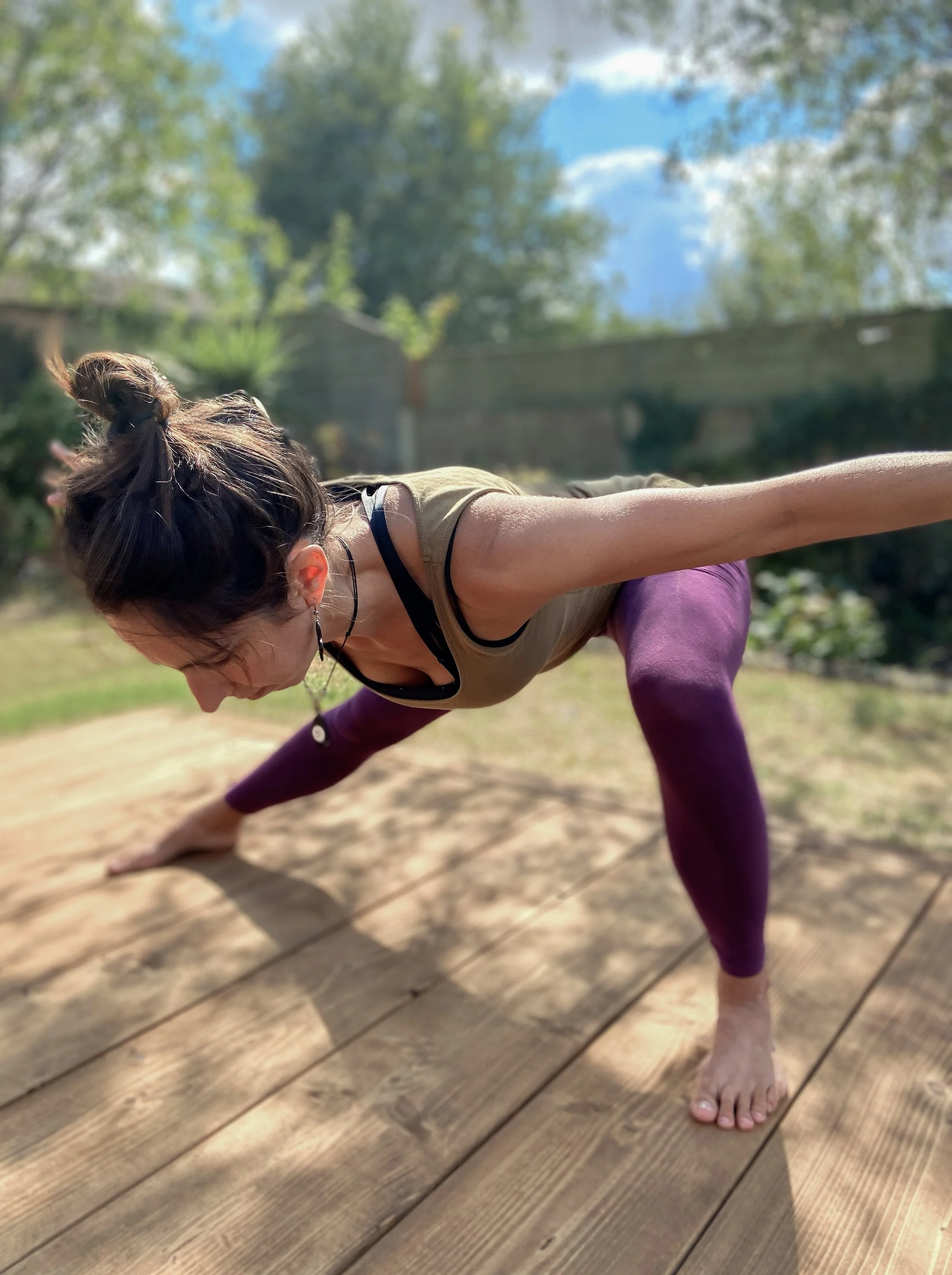
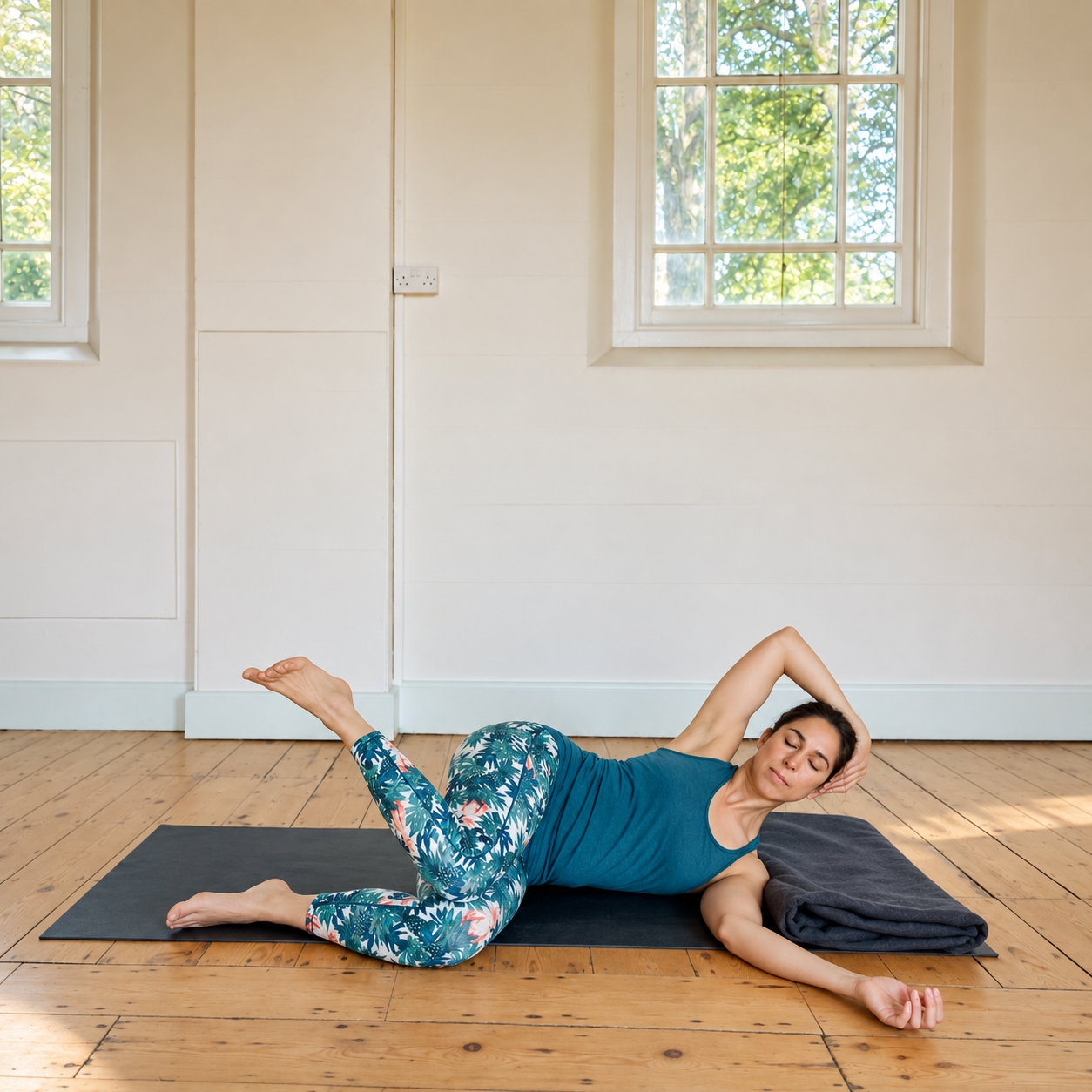
What to expect
We often begin with gentle, somatic movement - slower, more exploratory work that gives you time to arrive, settle and really inhabit your experience.
From there, we gradually build towards larger, more expansive and stronger practice, exploring standing postures, flowing sequences, balance, mobility, core and pelvic floor work, transitions and smaller moments of exploration along the way.
We then gradually wind down again, with every class ending in a long period of deep rest and relaxation - a chance to pause, absorb the practice and simply be.
I'm interested in what happens when we shift our attention from how a movement looks to how it feels.
There isn't necessarily one ideal shape to achieve. We can modify, adapt or pause, and learn to distinguish useful effort from unnecessary tension.
This doesn't mean doing less. It means developing enough awareness to make informed choices about how you move.
Feel rather than form

My own practice of Somatics has changed the way I practise and teach Yoga.
Slowing down and paying attention has given me a much more detailed sense of my own movement patterns. I now bring that same curiosity to asana, breaking movements down into their component parts and exploring how different parts of the body work together.
For me, this creates a practice that can develop strength, mobility and confidence without losing sensitivity and ease.
why a somatic approach?
I offer Beginners and Improvers classes, with different starting points depending on your experience.
Beginners: Recommended for most people, these classes introduce the foundations of my approach to Yoga.
Improvers: For those with an existing grounding in Yoga or a related movement practice, particularly Pilates.
These classes may be a good fit if you:
Are new to Yoga or returning after a break.
Have an established practice and want to explore it from a different perspective.
Are curious about developing a deeper relationship with your body through movement, breath and awareness.
Want a practice that balances physical challenge with time to slow down and rest.
Classes include weight-bearing on the hands and knees, kneeling lunges and transitions between the floor and standing. If you have significant mobility restrictions, pain or an injury that limits these movements, Somatics may be a more suitable place to start.