
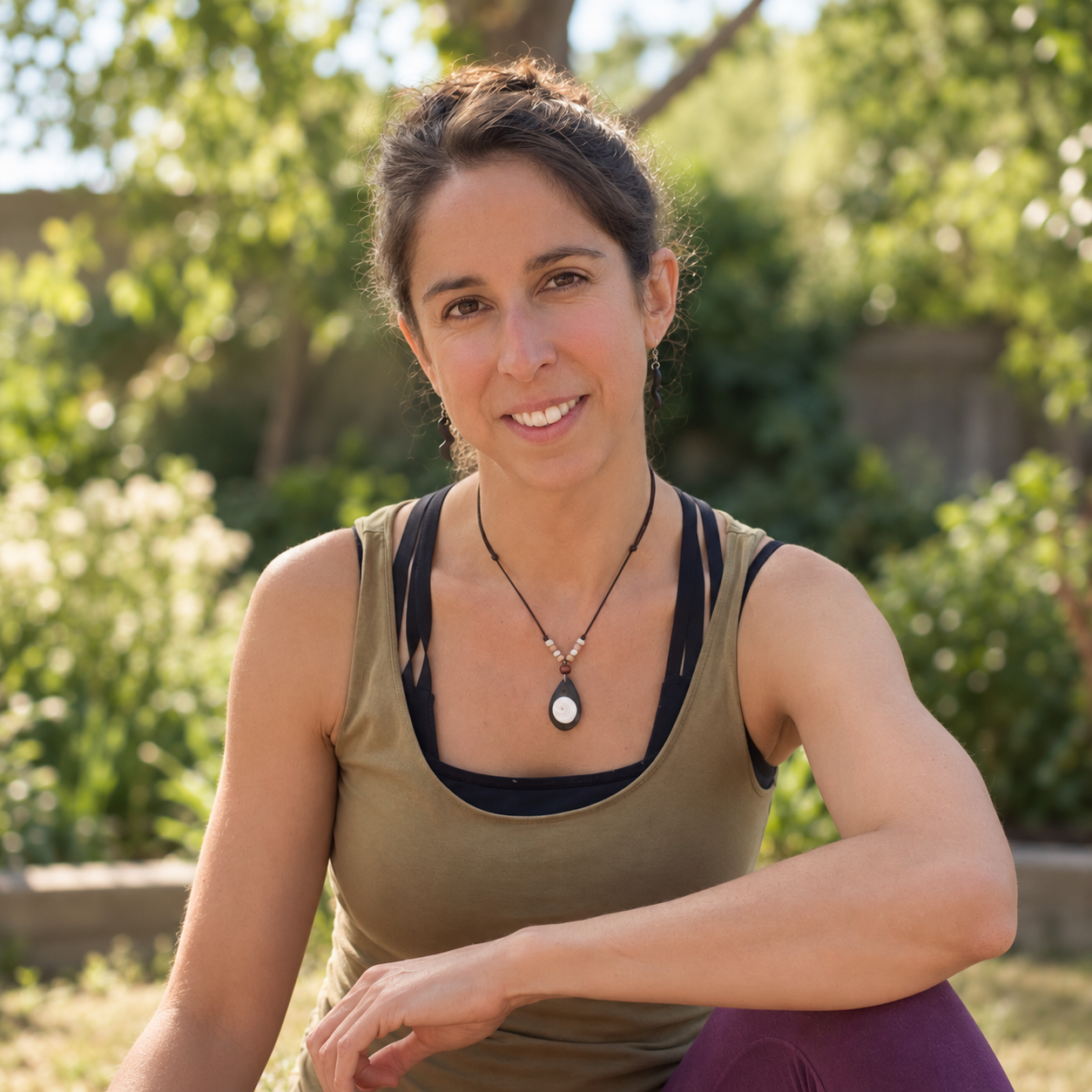
ABOUT Natalie
Natalie Jobanputra is a Senior Yoga Teacher and Somatic Movement Educator with over 20 years of experience practising and teaching Yoga.
Her training spans traditional and contemporary Yoga, Hanna Somatics, developmental movement, Yoga for Bone Health and Osteoporosis, Core and Pelvic Floor-informed practice, Yoga and Neuroscience, and counselling skills. She has particular experience working with people living with chronic pain, chronic fatigue and persistent tension, alongside teaching classes for people of all ages and levels of experience.
Natalie continues to develop her practice through ongoing study, currently including Yoga Detour Movement Map training with Cecily Milne.
My story
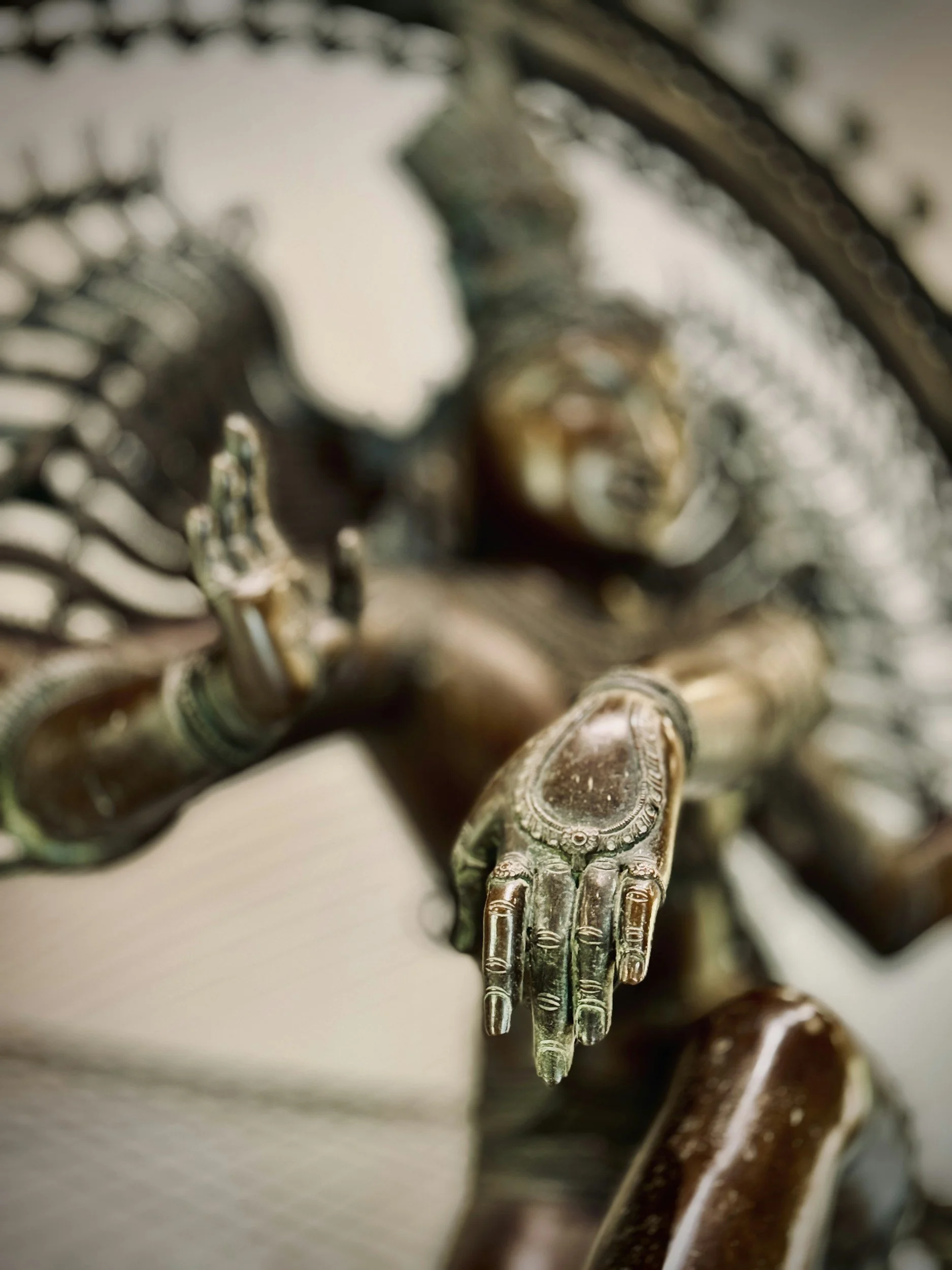
Yoga has always been a part of my life in some way. As a child I used to imitate my Indian Dad’s idiosyncratic Yoga practice - morning headstands against the bathroom wall, sitting in lotus and random attempts at wheel pose. Meanwhile, my Welsh grandmother, on my Mum’s side, taught me breathing exercises, having learned some Yoga directly from B.K.S. Iyengar.
I grew up with aspects of Hindu culture woven into everyday life, and had some sense that Yoga belonged to a much bigger world of philosophy and spirituality, although I had little understanding of that world at the time. I knew Yoga first through the body: through shapes, breathing and imitation.
I came to Yoga seriously in my late teens, during a difficult period of my life. I was struggling with anxiety, depression, insomnia and addictive patterns. Watching my brother practising some Yoga poses after a trip to India, I was mesmerised by the sense of calm and presence he seemed to exude. I began practising every day, teaching myself from books and videos.
Yoga didn't fix everything, but it gave me a way of dropping into the present moment through the breathing, moving body, and helped me feel at home in my body again.
Over the years I explored different traditions, including Ashtanga, Iyengar and Sivananda, and spent extended periods in India studying Yoga and meditation and living and teaching in ashrams. For many years I was drawn to strong, dynamic practice and to the challenge and discipline it offered.
I loved this way of practising, but over time my body began to tell me that something needed to change.

finding somatics
After years of practising and teaching strong, dynamic Yoga, I experienced my own periods of pain and injury. Pregnancy and early motherhood brought further changes, and eventually the way I had always practised Yoga was no longer serving me as it once had.
I discovered Somatics in 2017.
My first experiences were surprisingly humbling. Despite years of Yoga practice and a strong belief that I was highly body-aware, I discovered that when I slowed down and paid attention to very small, subtle movements, there were parts of my body I could barely sense at all.
It was frustrating, fascinating and eye-opening.
Somatics introduced me to a different way of paying attention: less concerned with how a movement looked and more interested in what I could actually feel. I began to notice habitual patterns of tension, to become more aware of how stress affected the way I inhabited my body, and to develop a much more nuanced sense of what was happening from moment to moment.
Alongside all this movement, I rediscovered something I had been missing for a long time: stillness.

the way i teach
Somatics has changed much more than the way I move.
I'm increasingly interested in the relationship between our physical, emotional and mental experience, and in how attention to the body can open into greater presence, calm and self-awareness.
For me, embodied practice isn't about endlessly analysing ourselves or turning inwards for its own sake. It's about becoming more at home in ourselves, so that we have more choice in how we respond to life, how we relate to other people and how we inhabit the world around us.
I'm interested in curiosity rather than striving, sensation rather than appearance, and choice rather than prescription. I want people to develop enough awareness to notice what they're experiencing, understand their own patterns and make informed choices about how they move.
finding my way back to Yoga
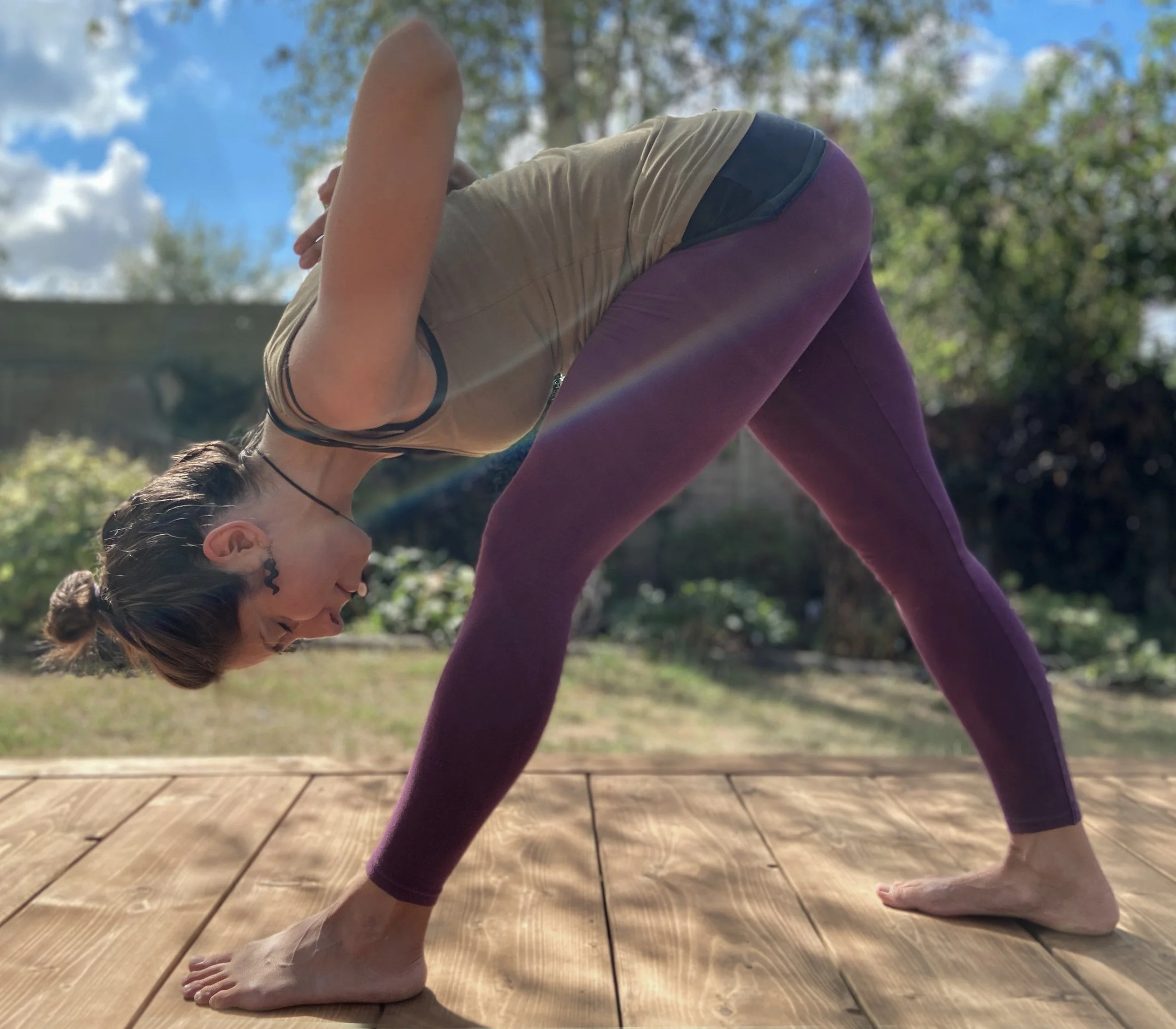
One of the unexpected gifts of Somatics has been finding my way back to Yoga.
I haven't lost my love of strong movement, exploration or asana. What has changed is my relationship with them.
I now approach Yoga with a greater interest in the building blocks of movement: what we're actually doing, why we're doing it, what we're asking of the body and how it feels from the inside.
I'm currently deepening this work through Cecily Milne's Yoga Detour Movement Map training, exploring movement in greater detail and how its component parts can inform Yoga practice.
This is the perspective behind my Embodied Movement Yoga classes: a practice that can move between exploration, strength and restoration, while maintaining attention to the felt experience of being in your body.
Training & experience
I've been teaching Yoga since 2006 and have trained across a range of traditional and contemporary approaches, including Ashtanga, Iyengar and Sivananda. I've spent long periods in India studying and teaching, as well as teaching extensively in the UK.
yoga
British Wheel of Yoga Foundation Course
500-hour Yoga Scotland teacher training
David Swenson Ashtanga teacher training
Sivananda Vedanta teacher training in India
Further long-term study in India with teachers including Sharat Arora and Bharat Shetty
Yoga for Bone Health & Osteoporosis with Niamh Daly
Core & Pelvic Floor-informed training with Lauren Ohayon and Diana Zotos Florio
Yoga and Neuroscience training with Kristine Weber
Currently studying Yoga Detour Movement Map with Cecily Milne
somatics & related study
One-year, in-person training with Lisa Petersen, incorporating Hanna Somatics and principles of developmental movement, qualifying as a Somatic Movement Educator in 2023
Ongoing study of developmental movement and other somatic approaches
Level 2 Certificate in Counselling Skills
Ongoing study with Donna Farhi and Lisa Petersen